The Diversification Move: turning volatility into a fee machine on Meteora.
How I spread liquidity across 10 to 20 Meteora pools: position sizing by bag size, filters for pools worth entering, and exit rules.
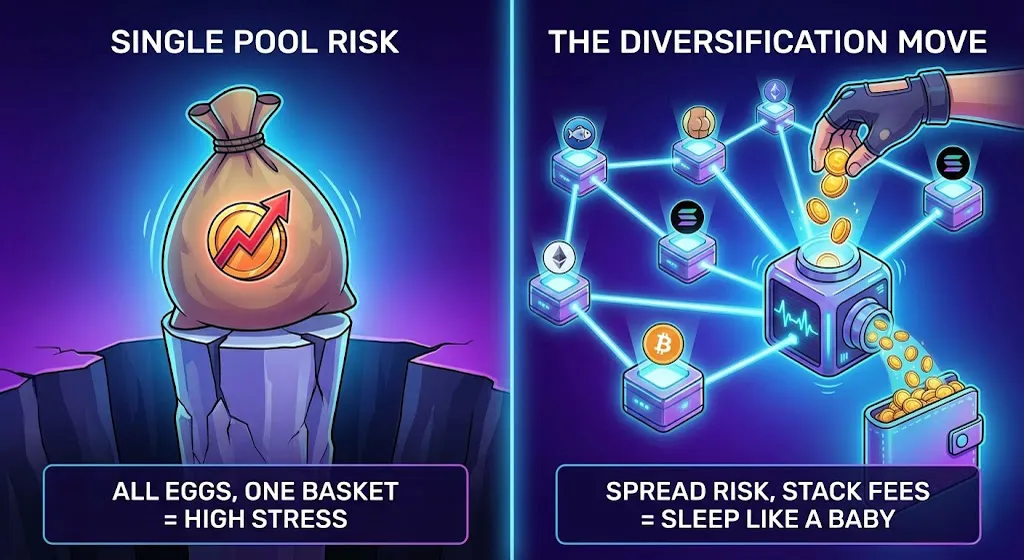
Stop hunting for unicorns. Most LPs lose because they treat liquidity providing like gambling, they dump their entire bag into one "perfect" pool and pray it doesn't rug or go sideways.
If you want to survive and scale in DeFi, you need a system, not a prayer. I call it the Diversification Move. It's the strategy I'm using right now on my coaching wallets to prove that consistent yield is about structure, not luck.
The strategy: the Diversification Move
The core idea is simple: spread your liquidity across a wide net of tokens on @MeteoraAG to capture market-wide volume while minimizing individual asset risk. But here's the part most people get wrong: the number of pools you enter isn't a random guess. The amount of positions you manage is a direct function of your total portfolio size and your specific SOL-per-token allocation.
- Small Bags (e.g., less than 20 SOL): you need enough positions to be diversified but not so many that your fees get eaten by transaction costs. Aim for 1-2 SOL per pool. In my coaching wallet, I run 10 positions with a 19 SOL bag. This keeps the risk per ticker low (~5-10%) while making the management effortless.
- Large Bags (e.g., 500+ SOL): scaling doesn't mean you just add 100 more pools. It means you increase your weight per pool while maintaining a healthy spread. For a 560 SOL portfolio, you can easily run around 20 positions (pools). Here, the allocation jumps to 25-40 SOL per token.
The formula is: Total Portfolio / Risk Tolerance Per Token = Number of Positions.
By spreading out, you're farming the market's volatility, not betting on a single coin's survival. If one pool dies, the other 17 are still printing.
Selection criteria: how to filter for gold
You don't just "ape" into the trending list. You use data to filter for sustainable yield.
Here is my checklist:
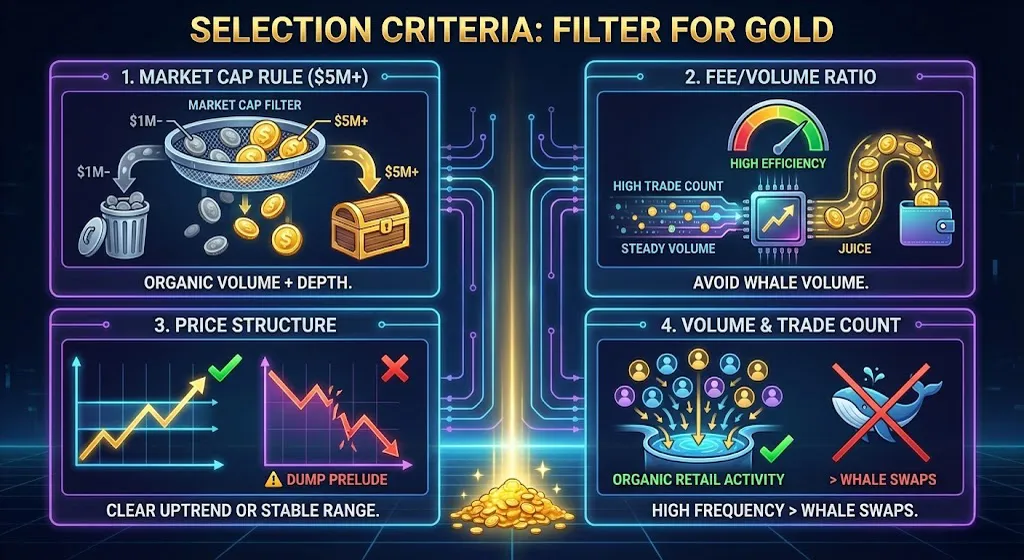
1. The Market Cap Rule ($5M+)
Stop chasing sub-$1M market cap "gems" with your main liquidity. They lack the depth and organic volume to sustain long-term fees.
- Target: focus on tokens with a market cap >$5M.
- Reason: these tokens usually have established communities and enough volume to keep your bins active without immediate rug risk.
2. The Fee/Volume Ratio
I look for a high 24h Fees / TVL %. This tells you exactly how efficient a pool is.
- Check: high trade counts + steady volume = juice.
- Red Flag: if volume is high but all from one whale, stay away. You want organic retail activity.
3. Price Structure
Only enter tokens in a clear uptrend or stable horizontal range. Avoid tokens with a "descending triangle" or those hugging the bottom of their range with no bounce, that's a dump prelude.
Execution: beginner vs. advanced
For Beginners (The Even Spread): split your SOL equally across 10-15 pools. Use a wide Bid-Ask strategy with a high bin count (100+). This gives you a "set it and forget it" setup that stays in range longer, even if you aren't watching the charts 24/7.
For Advanced LPs (The Layer Cake): use my Layer Cake logic. Instead of entering all at once, place your first one-sided SOL position at a support level. If the price dips 50% into your range, drop a second layer with double the size and double the bins. This turns a price drop into a high-fee accumulation zone.
1. For Beginners: The "Even Spread"
- Setup: take your SOL and split it equally into 10 pools.
- Range: use a wide Bid-Ask strategy (100+ bins) to capture more price action without needing to rebalance every hour.
- Focus: stay in one-sided SOL positions. It's simpler, reduces exposure to risky tokens, and lets you "buy the dip" automatically.
2. For Advanced LPs: The "Layer Cake"
- Setup: tiered entries. Start with a base layer (e.g., 2 SOL).
- The Move: if price dips 50% into your range, drop a second layer with 2x the size and 2x the bins.
- Timing: rebalance around global trading sessions (UTC 00:00-02:00 pumps vs 08:00 dumps) to skip the worst of the volatility.
3. Tier-Based Entry (Size Discipline)
- Tier 1: The Blue-Chips (>$25M market cap). Logic: these are your "safe" earners. They have high liquidity depth and organic volume. Allocation: max 20% of your portfolio per position.
- Tier 2: Mid-Caps ($5M to $25M market cap). Logic: medium risk. These tokens can still move 20-30% in a day. Allocation: around 10-15% of your portfolio per position.
- Tier 3: The Degen Plays (around $5M market cap). Logic: high risk, high reward. These can rug or get nuked in minutes. Allocation: max 5-10% of your portfolio.
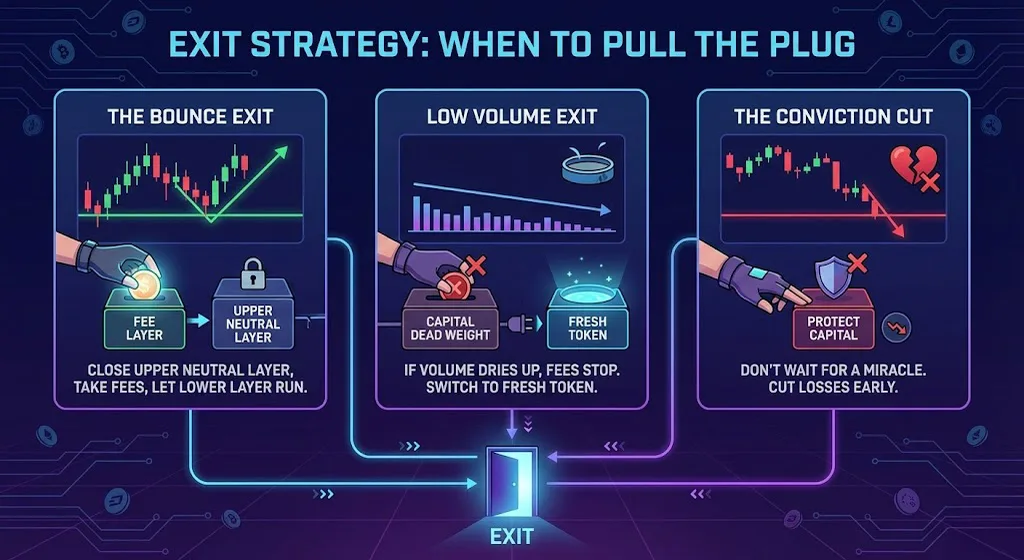
Exit strategy: when to pull the plug
Knowing when to leave is just as important as the entry.
- The Bounce Exit: in a Layer Cake setup, when price bounces from support, your upper layer usually becomes IL-neutral. Close it, take the fees, and let the lower layer take over.
- Low Volume: if 24h volume drops significantly, the fees won't cover your risk. Switch to a fresh token like $fish or $testicle.
- Broken Conviction: if price action looks "dirty" or breaks a major support level, cut the loss early. Protecting capital is the only way to stay in the game.
Real-world example: the coaching wallet
Here are some of my previous posts showing examples of this strategy.
 MichaelZogot@MichaelZogot
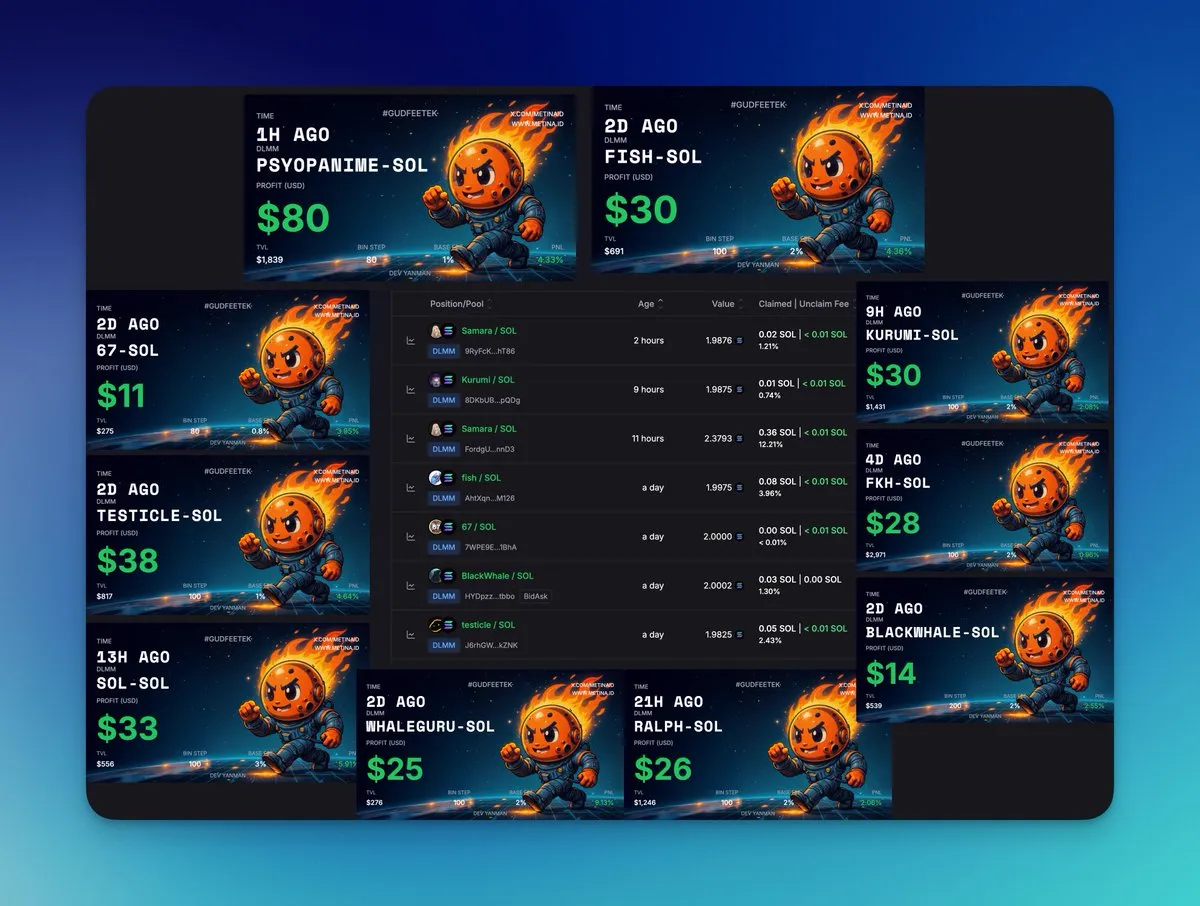 Jan 14, 2026View on X ↗MichaelZogot@MichaelZogot
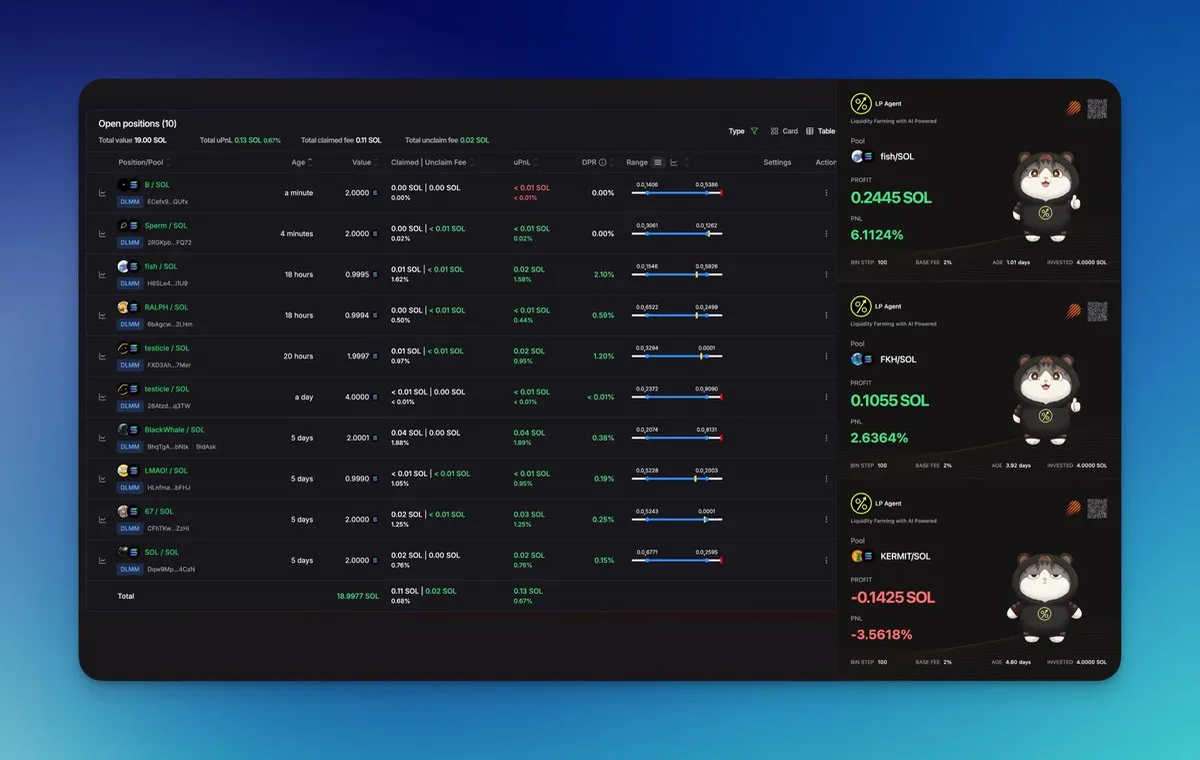 Jan 11, 2026View on X ↗
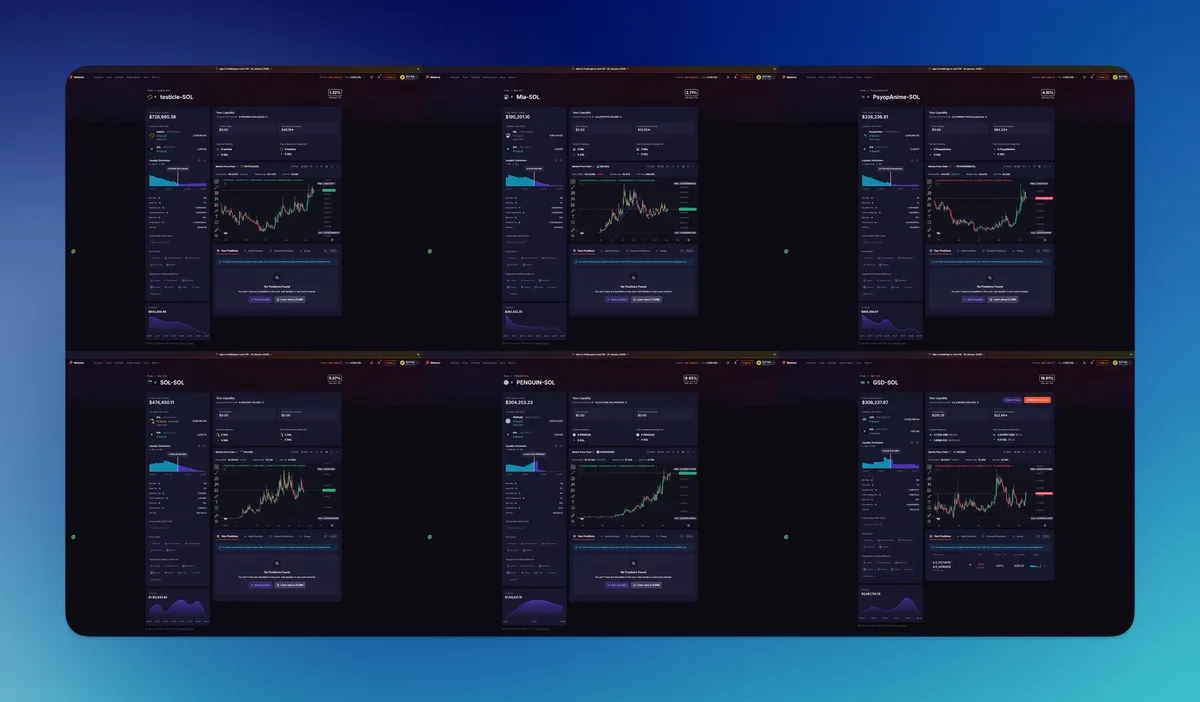
Potential candidates: tokens to watch
Based on my latest filters and the current market session, here are some candidates to look at:
Ticker list
- Infinitie-SOL
- Mio-SOL
- Popodomon-SOL
- SOL-SOL
- PENGUIN-SOL
- GSO-SOL
The final golden rule: stay vigilant
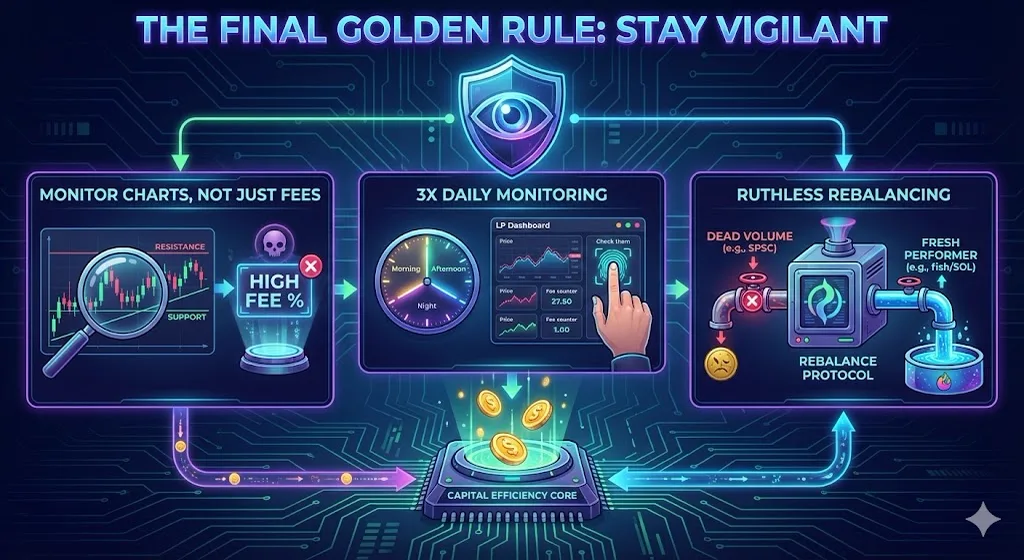
Diversification gives you a safety net, but it is not a "set it and forget it" strategy that you check once a week. To truly maximize the yield from this approach, you must maintain a professional monitoring routine:
- Check 3x Daily: review your positions in the morning, afternoon, and before bed. Markets move fast, a pool that was printing at noon might be dead by dinner.
- Monitor the Charts, Not Just the Fees: fees can be deceptive. A pool might show high yield because the price is dumping through your bins. Always look at the price structure to ensure the token isn't breaking its support.
- Be Ruthless with Rebalancing: if a token's volume dies or the price action gets "dirty", close it. It is better to move your capital into a fresh performer than to sit in a stagnant pool hoping for a bounce.
Rebalancing Move 1: The Rebalance Reset (Same Token)
Sometimes a token is performing perfectly, but the price has drifted to the very edge of your bins. Don't wait for it to go out of range and stop earning.
The Action: perform a "Rebalance Reset" by closing the position, claiming your fees, and immediately reopening it with your liquidity.
Rebalancing Move 2: The Full Rotation (Switching Tokens)
If a token's volume dies or the price action breaks a major support level, your capital is now "dead weight".
The Action: close the position entirely and move that capital into a fresh, high-performing candidate.
The goal of the Diversification Move is to keep your capital working at maximum efficiency. By spreading your bets and staying on top of the data, you turn the chaos of the market into a predictable stream of income.